Thursday, 26 July 2012

RI grants for school Mathematic enrichments


The following grant information might be of interest to teachers and providers of activities on the STEM Directories.

--------------------------------------------------------
The Royal Institution of Great Britain
Grants for schools for mathematics enrichment activity

Do you teach mathematics to primary or secondary aged pupils?

Would you like to organise enrichment and enhancement activities to raise the profile and enjoyment of mathematics in your school?
---------------------------------------------------------
The Ri E&E grants scheme will make 72 grants of up to £500 available to teachers of mathematics to choose activities from the STEM Directories (www.stemdirectories.org.uk) in the 2012-2013 academic year.

An exciting opportunity to initiate mathematics enrichment and enhancement (E&E) activities in their schools and help integrate E&E into their curricular practice. We welcome applications from all schools, with preference being given to state-funded schools that have not had external mathematics enrichment activities in the past two years.

Grants of up to £500 and guidance on choosing activities listed in the online STEM Directories (www.stemdirectories.org.uk) are being offered by the Royal Institution (Ri, www.rigb.org), funded by The Clothworkers' Foundation. The scheme is designed to raise awareness and use of enrichment activities and to support your professional development, whilst enhancing the mathematical experience in your school.

There are a limited number of grants and these will be allocated at two stages. The deadlines for applications are as follows:

Round 1:  Wednesday, 26 September, 2012
Round 2:  Friday, 30 November, 2012
---------------------------------------------------------
Summary
What is being offered:
. Grants of up to £500 for a mathematics E&E activity for your school in 2012-2013, to be chosen from those listed at www.stemdirectories.org.uk .
. Consultancy and support on the choice of activities during the application process, and on fostering related good practice.

In exchange you will be expected to:
. Provide feedback on the delivered activity and this project.
. Engage in how learning from the experience can inform and be sustained in your and your school's teaching.

Details on how to apply, grant entitlements and expectations, are available by emailing maths@ri.ac.uk .
---------------------------------------------------------

Kind regards,
Sarah

Sarah-Jane Lonsdale
Mathematics Assistant

The Royal Institution of Great Britain, 21 Albemarle Street, London W1S 4BS

t. 020 7491 6530


Support the Ri: become a member or donate today Follow the Ri on Twitter and Facebook

Royal Institution Masterclasses for Young People are now on Facebook.
Like us to keep up to date!

Taught in the 80s and relevant now...

The National Science Learning centres have added a interesting item to their online archive.
It is the Nuffield Home Economics course materials (Student & teachers guides) aimed at 11-14 and 14-16 year-olds and taught in the '80s.
On opening the first page, I was struck by their discussion of the Food Security agenda (although it wasn't known by that term then?). The mechanism? Examination of the ingredients list on a tin of Baked Beans (A common 'english' food item - advertising jingle "A million house-wives everyday pick a tin of beans and say..."). From this starting point they illustrate the global sourcing of ingredients required to produce this processed food. It also has relevancy for the food safety angle of the mixing of ingredients and the contamination risks and the process of canning as a means of food preservation.
Later on it brings in the physics of cooking with conduction, convection and radiation as well as discussing models of solids, liquids and gases (excellent!).
Later chapters discuss nutrition, digestion and the relationship between food and health.


Wednesday, 25 July 2012

Calling all Primary & Secondary schools in England..


SCORE (Science Community Representing Education) is inviting schools in England to participate in a survey on resourcing requirements of science education

SCORE is carrying out the research to help provide a national picture of the current state of resourcing and provide evidence to inform national and local policy on the resourcing requirements of science education.

SCORE would like to invite all primary and secondary schools in England to take part in this important research via a short survey, which will take place in the autumn term - schools wishing to do so should EMAIL scoreresourcing@pyetait.com.

Monday, 23 July 2012

Biology Week 13th-19th October 2012

Biology Week logoA date to put in your diaries:
The first ever Biology Week will take place on 13th-19th October, organised by the Society of Biology.
Events around the country will give everyone the chance to learn about biology, the science of the 21st Century.
We are very pleased to hear from organisations and individuals who are keen to run their own event. Here is some information on how. 
Events the Society of Biology has got planned during Biology Week include:
A public debate on Monday 15th October.
A launch event in the Houses of Parliament on Wednesday 17th October.
A late-night opening at the Royal Veterinary College on Thursday 18th October.
A launch for our Technicians Registers on Friday 19th October.
A full list of events is available on our website event pages.

A batch of Food Factory reviewing...

I finally caught up on Food Factory episodes...
Second in series looked at how bubbles are used in food processing.
So we had the celeb guests making "Chocolate coated honeycomb bars" (Hows that for avoiding mentioning brand names?) and Stefan made extruded maize snacks (Cheesy puffs). I loved the bit where he used a tumble dryer to coat the (unflavoured) puffs with a mix of oil and cheese flavouring. Brought back happy memories of my early days at the Institute where food materials research was done using extrusion cookers. Stefan also looked at why bubbly chocolate can taste more chocolaty than a solid bar.

In the third episode, the celebs made "Wheaty breakfast bricks" and Stefan made pasta (spaghetti) from wheat (using a hand mincer and lots of elbow grease).
So the focus was on mechanical processing of a basic food-stock (wheat). An important point was that removing water made for a long shelf life as reducing the water activity (Aw) slows down spoilage due to bacterial growth.


The fourth episode explored different applications of freezing in food processing.

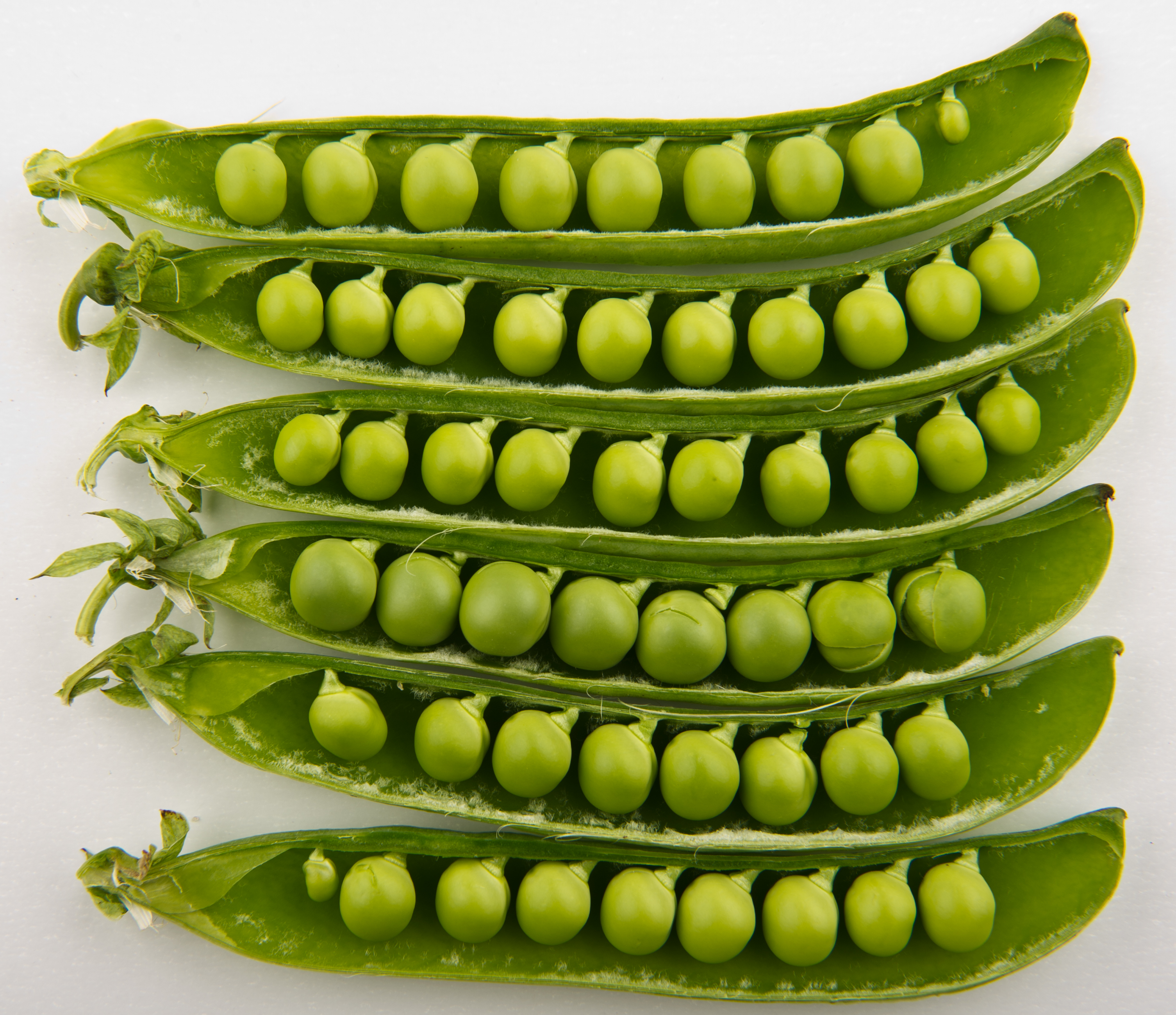
The celebrity guests made a three flavour/colour ice lolly and the Host (Stefan) made freeze dried coffee. We also saw how peas are rapidly frozen after harvesting and why (stopping sugar turning into starch and loosing sweetness as well as affecting shelf life).


Hopefully, this series is succeeding in making people think about the food that they buy in supermarkets and stores and the effort involved in producing it.

Is that an ant?


Another royal event see thousands arise to the throne (OK a very small throne).
Have you seen any flying ants - be part of this interesting bit of crowd-sourced science (with the Society of Biology) - details below:

Flying ant survey

Biology Week logo
Report your flying ant sightings
Flying ants commonly appear on exactly the same day in different locations in the UK, but sometimes they come out over a period of days or even weeks. We need your help to study whether flying ants appear at the same time in different parts of the UK, and to investigate what weather conditions encourage ants to fly. We've already got some good records, many of them from inside houses. Take a look at our ant map.

But we need more records. When you see flying ants please make a note of the time, date, location and weather conditions, then submit your records throughthis survey. Location can be a postcode or grid reference (ideally six figures). Don’t worry if you don’t know the grid reference, you can look it up on a map using this tool, or just give us a detailed description.

If you have a camera with you then you can send us your photos by emailing Christina Catlin-Groves (flyingants2012@gmail.com). Alternatively, tweet your picture using the hashtag #flyingantsurvey or tag it on Flickr using ‘flyingantsurvey’ and it will be uploaded to our Flickr group. 

The appearance of thousands of flying ants is an amazing phenomenon, and you can read more about why ants fly. Thanks to your help we will be able to study the 2012 pattern of flying ant appearances, and the results will be announced inBiology Week. 

Flying ants are likely to come out in July or August, but in the meantime here are some experiments you can carry out in your garden or a park. We’d love to hear about what you find – you can email Rebecca Nesbit,rebeccanesbit@societyofbiology.org, or leave us a comment on our blog.
This project is run in collaboration with Dr Adam Hart from the University of Gloucestershire and Christina Catlin-Groves from the Gloucestershire Wildlife Trust.
Report your flying ant sightings
Lasius niger - flying ants
Photo copyright John Mason, courtesy of Buglife

Also read the BBC web-site article on the survey with more on why scientists want to do this.
And Daily Mail (!) article here.
And BBC News Magazine here (26/7/2012)


A sneak peek at the current results on a Google Map (on Society for Biology web-site)

Saturday, 21 July 2012

Science Teacher CPD - EBI Bioinformatics course

This may be of interest to science/IT/Maths teachers:-


The European Bioinformatics Institute, Europe's hub for biological data, runs an annual training course (LearningLab) to help European science teachers familiarise themselves with the data revolution in molecular biology.   

Applications for the 2012 ELLS LearningLab on 
Biology 2.0 - making sense of biological data are now open. The Biology 2.0 LearningLab will provide an interactive introduction to the field of bioinformatics, a central part of modern biology that can be used effectively in the classroom to teach biological concepts. The course will run for two full days from Monday 26 - Tuesday 27 November 2012 and be held at the European Bioinformatics Institute (EBI) in Hinxton, near Cambridge, UK. 

Places on this course are limited to 35 and the deadline for applications is 12 September 2012. The course registration fee is £100.

During the 2-day course, a combination of seminars, discussions and hands-on activities will: 

- Introduce you to the different types of biological information that are stored in public databases, and how to find this information;
- Look at genetic variation and its link with disease;
- Discuss the ethics of personal genomics;
- Update your knowledge on current biological research and introduce our scientists;
- Illustrate a range of classroom activities and equip you to use the freely available bioinformatics resources to support your teaching of biology;
- Include a visit to a world-class sequencing facility;
- Allow you to network and share your experiences with teachers from around Europe.

Further course information, including the course outline, details of the application procedure, travel and accommodation information can be viewed at http://www.ebi.ac.uk/training/onsite/121126_ELLS.html. We are able to offer three bursaries to help meet other costs associated with attending the course and these will be awarded based on justification provided by applicants at the registration stage.

The course is open to all European high-school and further education science teachers. The activities featured are ideal for use with students aged between 16-19 years old but may also be applicable for younger students. Course attendees should be familiar with use of the internet but no specialist computing skills are required. Please note that the course will be run in English.